Brussels R0 - Field
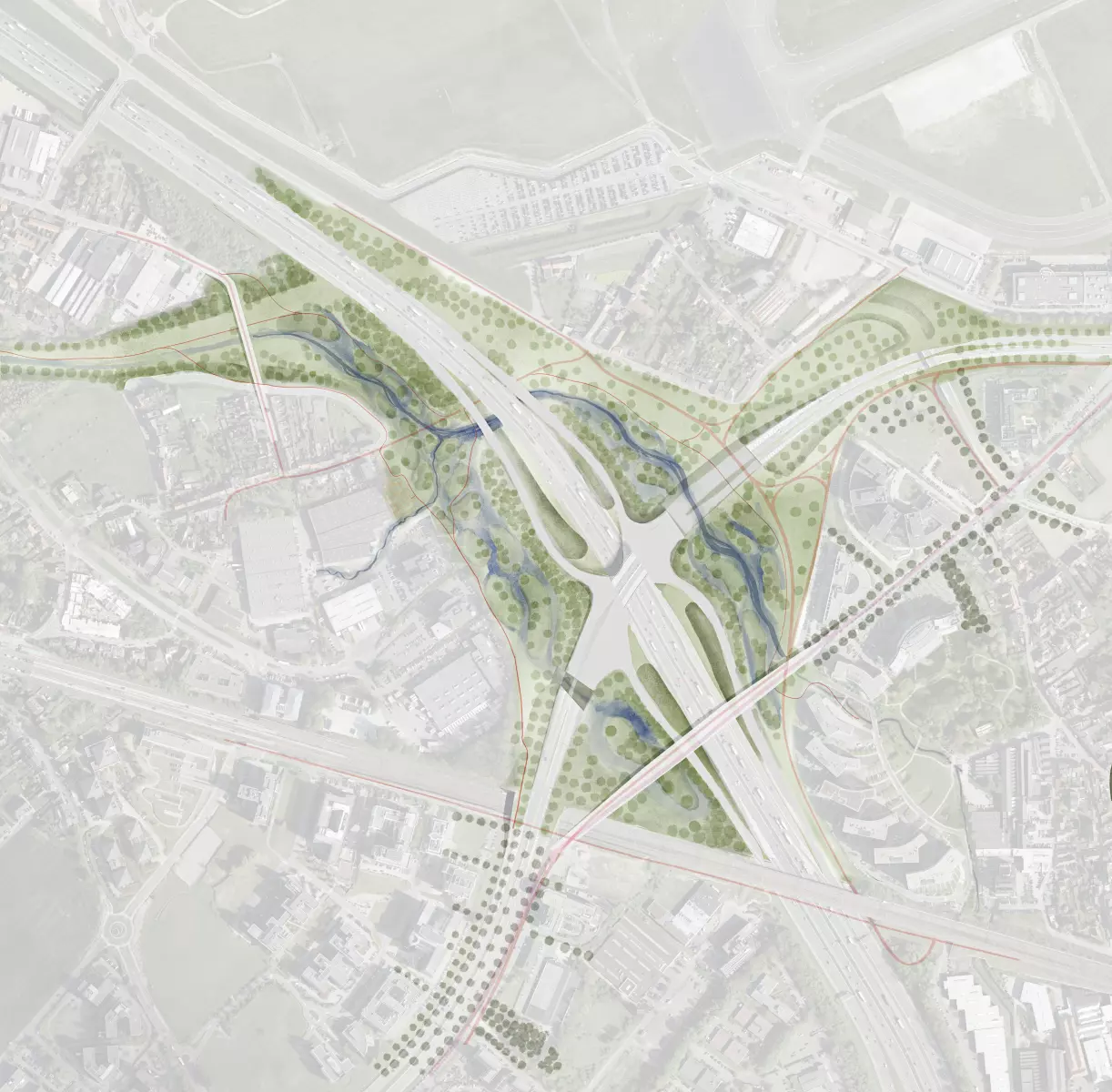
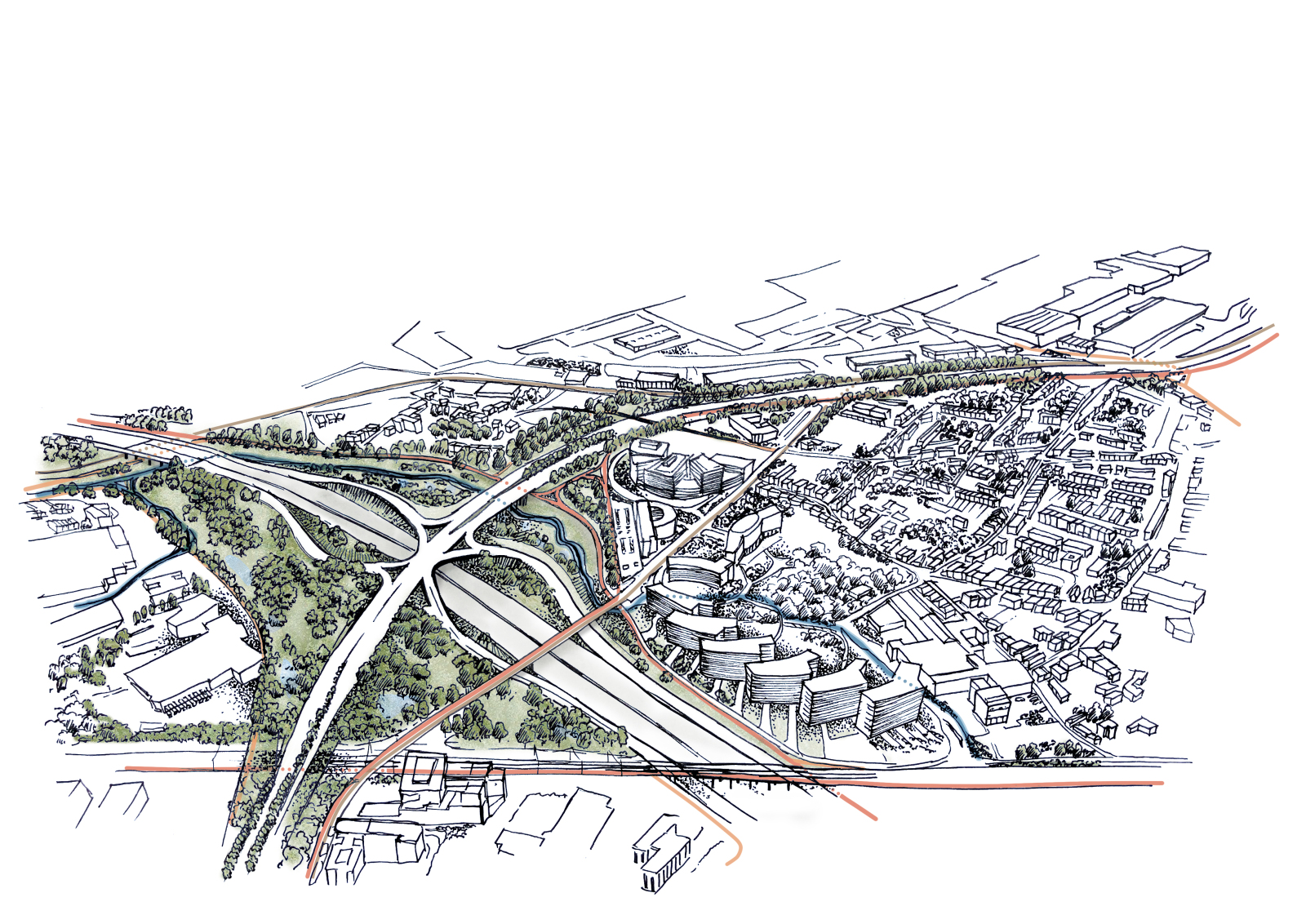
The Brussels R0 x A201 project reimagines one of the most complex infrastructural junctions in the Brussels periphery as more than a mobility challenge. Located at the crossing of the Brussels Ring and the A201 towards Brussels Airport, the site today is defined by outdated, fragmented and space-consuming road infrastructure. It forms a strong barrier between Zaventem, Diegem and the surrounding urban areas, while also interrupting ecological continuity and limiting accessibility for pedestrians, cyclists and public transport.
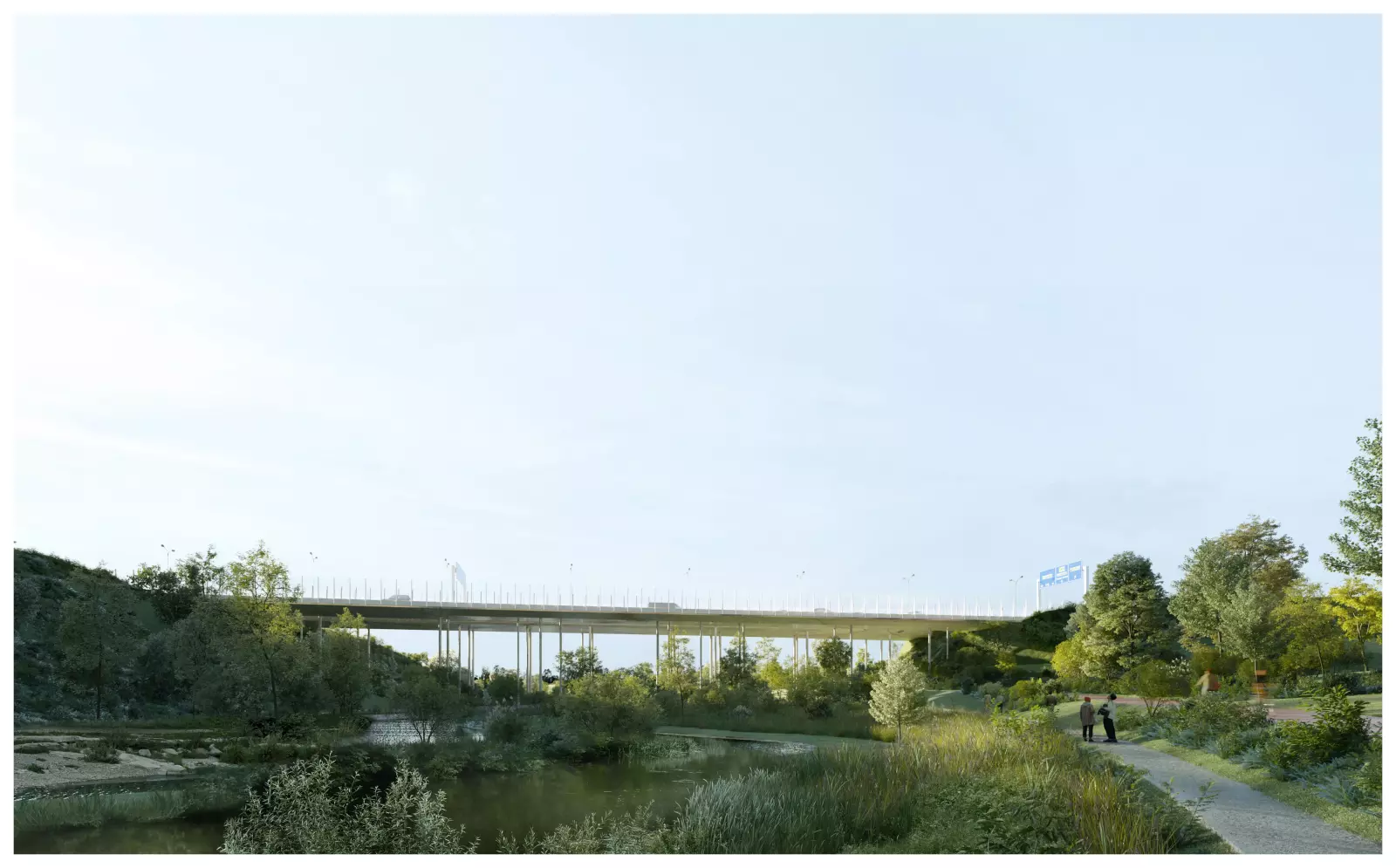
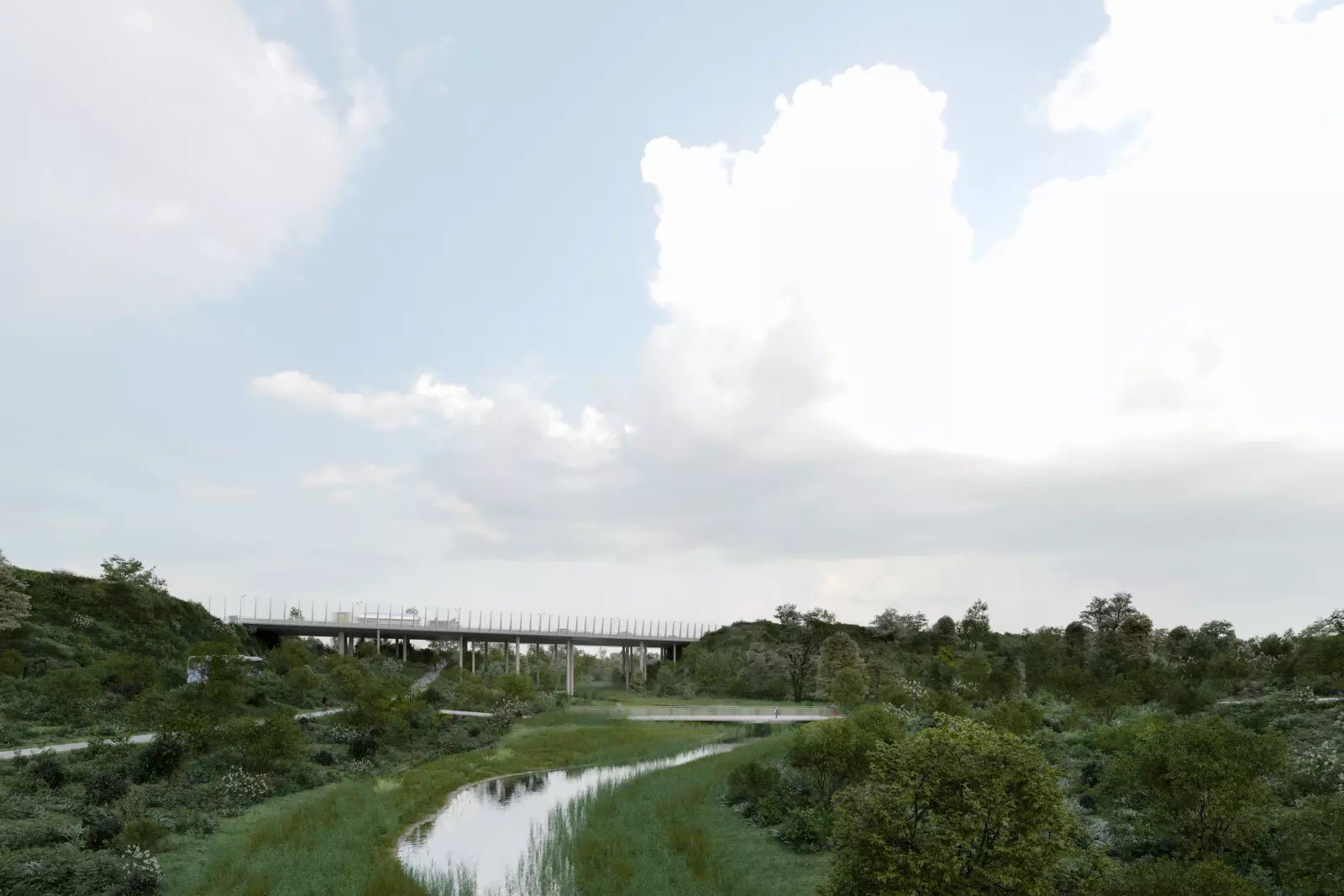
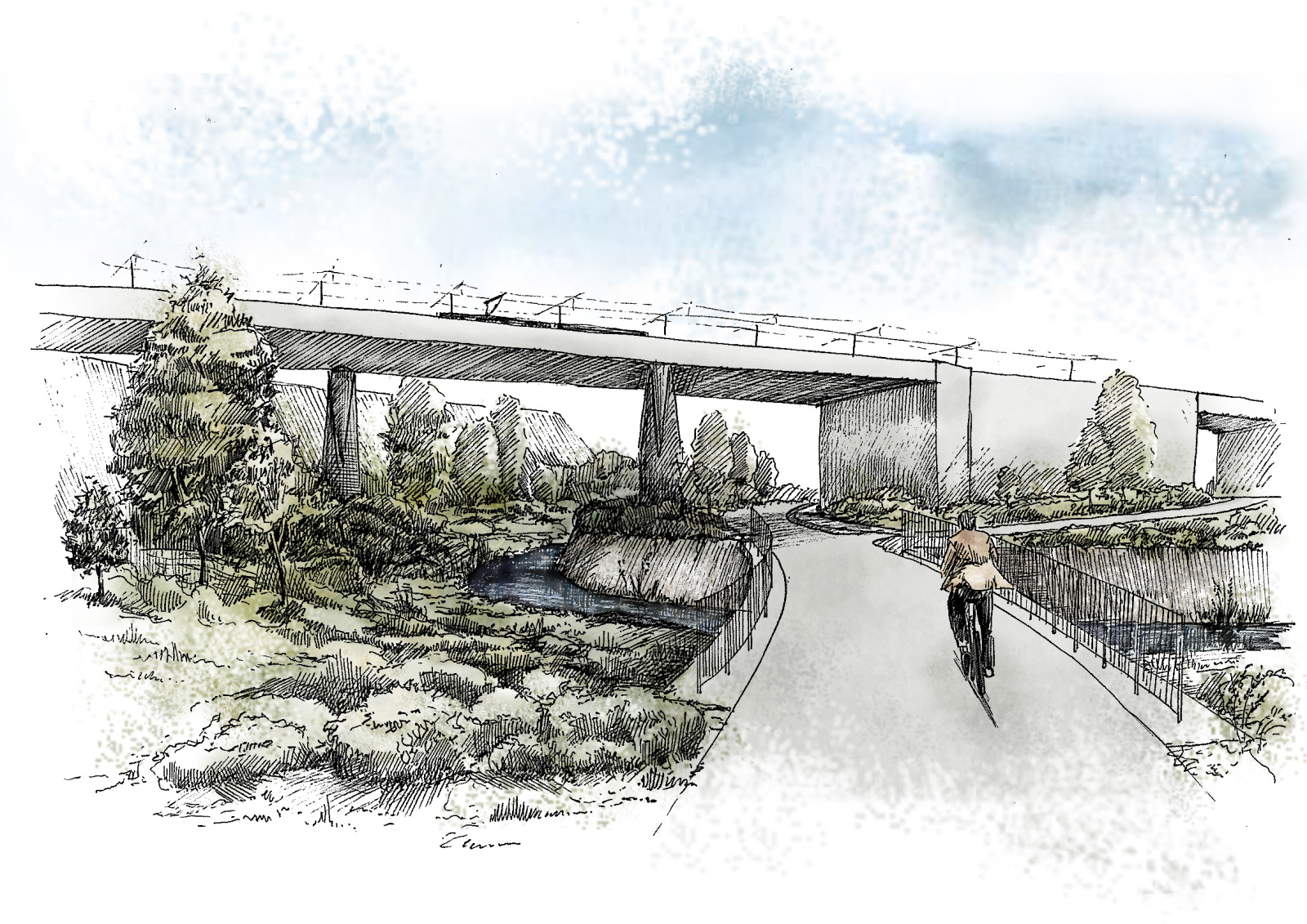
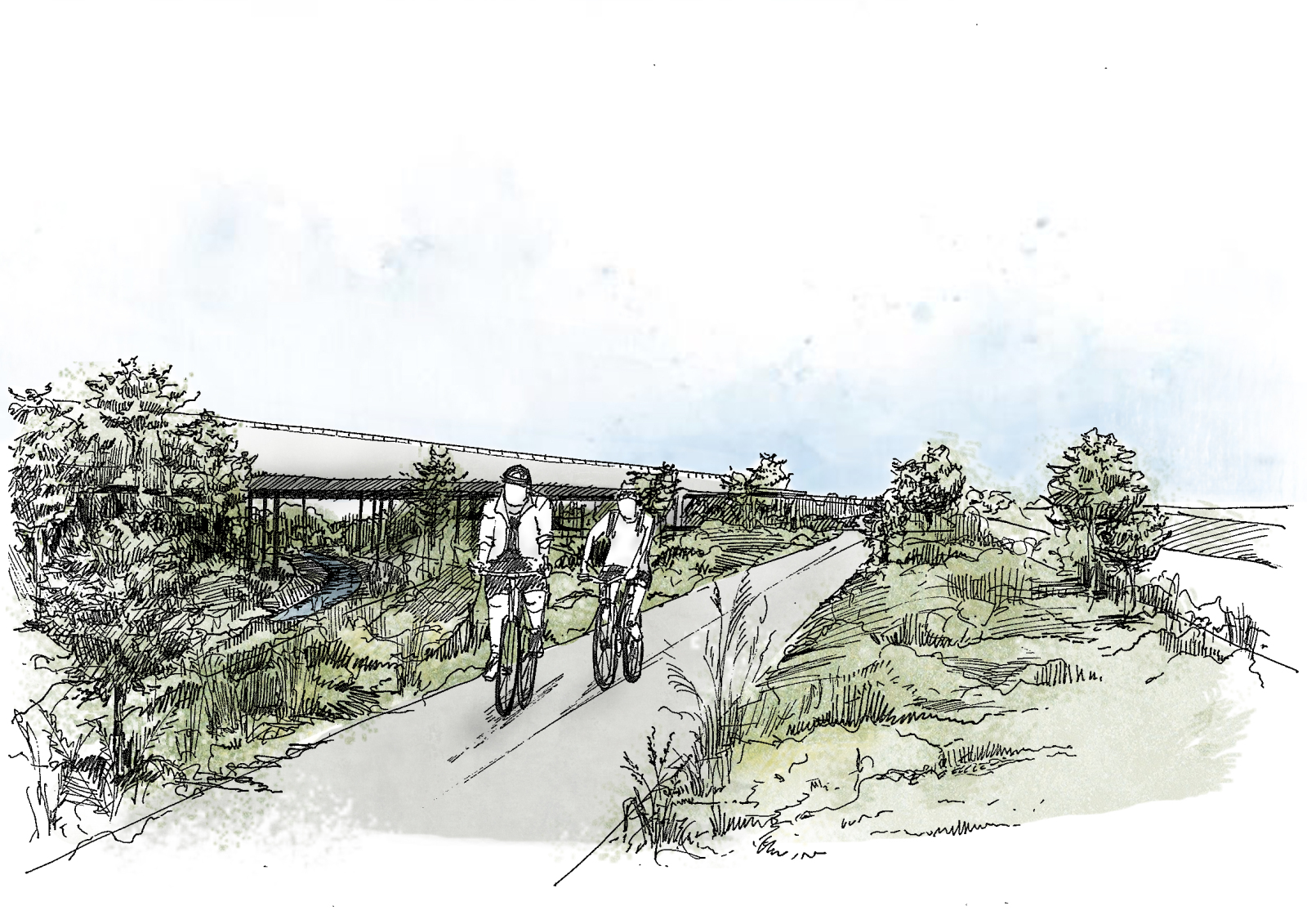
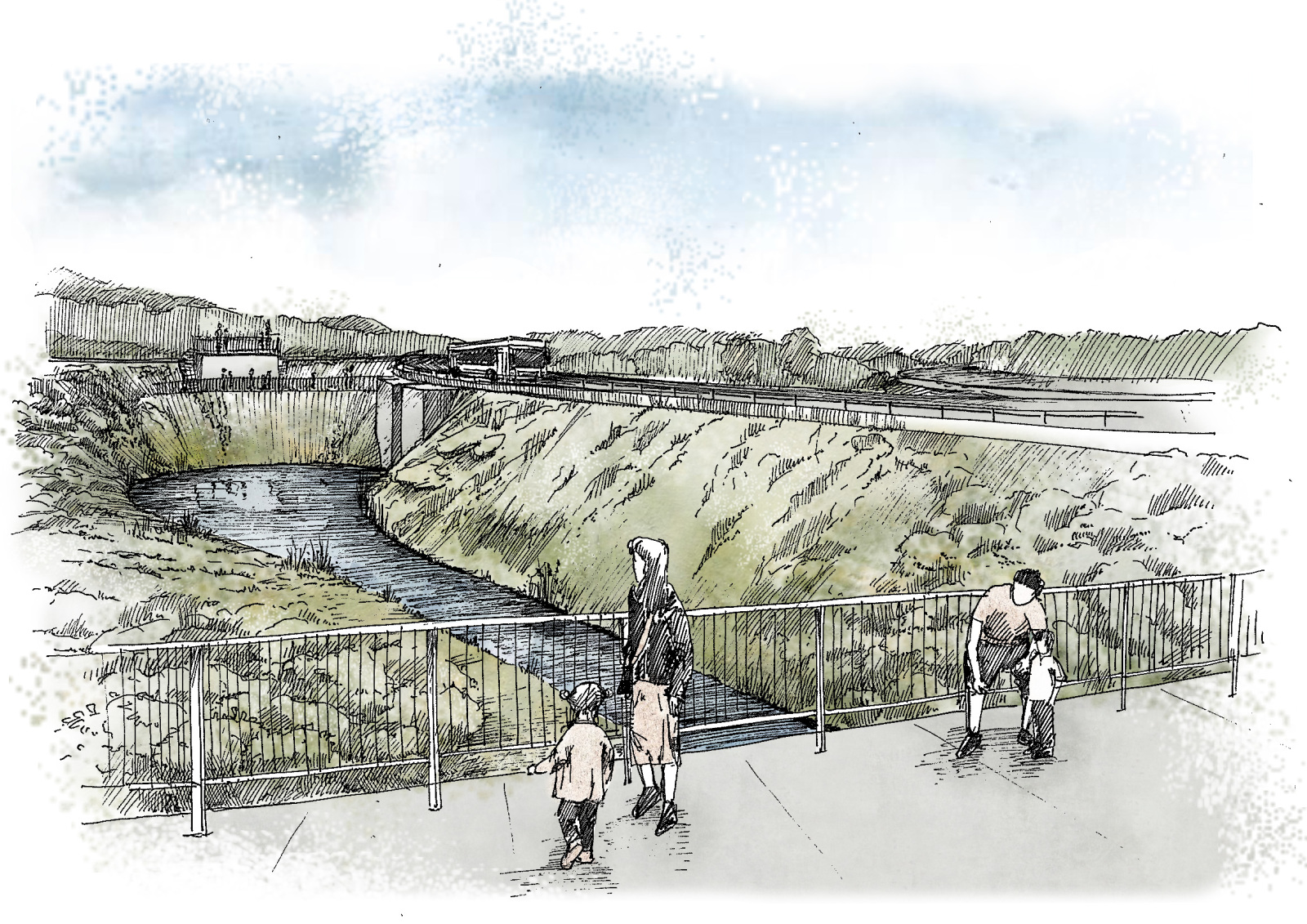
Rather than approaching the redesign as a purely technical traffic operation, the project frames infrastructure as an urban and landscape assignment. The ambition is to transform a hard infrastructural node into a generous, open and ecological landscape that reconnects neighbourhoods, mobility networks and natural systems. By reducing the single-use dominance of road infrastructure, the proposal creates space for the restoration of the Woluwe valley as a continuous landscape corridor and as a new public space for the Flemish Rand.
At the heart of the vision is the recovery of the valley landscape. The presence of the Woluwe, the large volumes of runoff water from the road infrastructure and the significant height differences are used as opportunities to develop an ecological water machine. This new landscape system captures, buffers and filters water, while creating diverse habitats and a softer counterweight to the surrounding infrastructure.
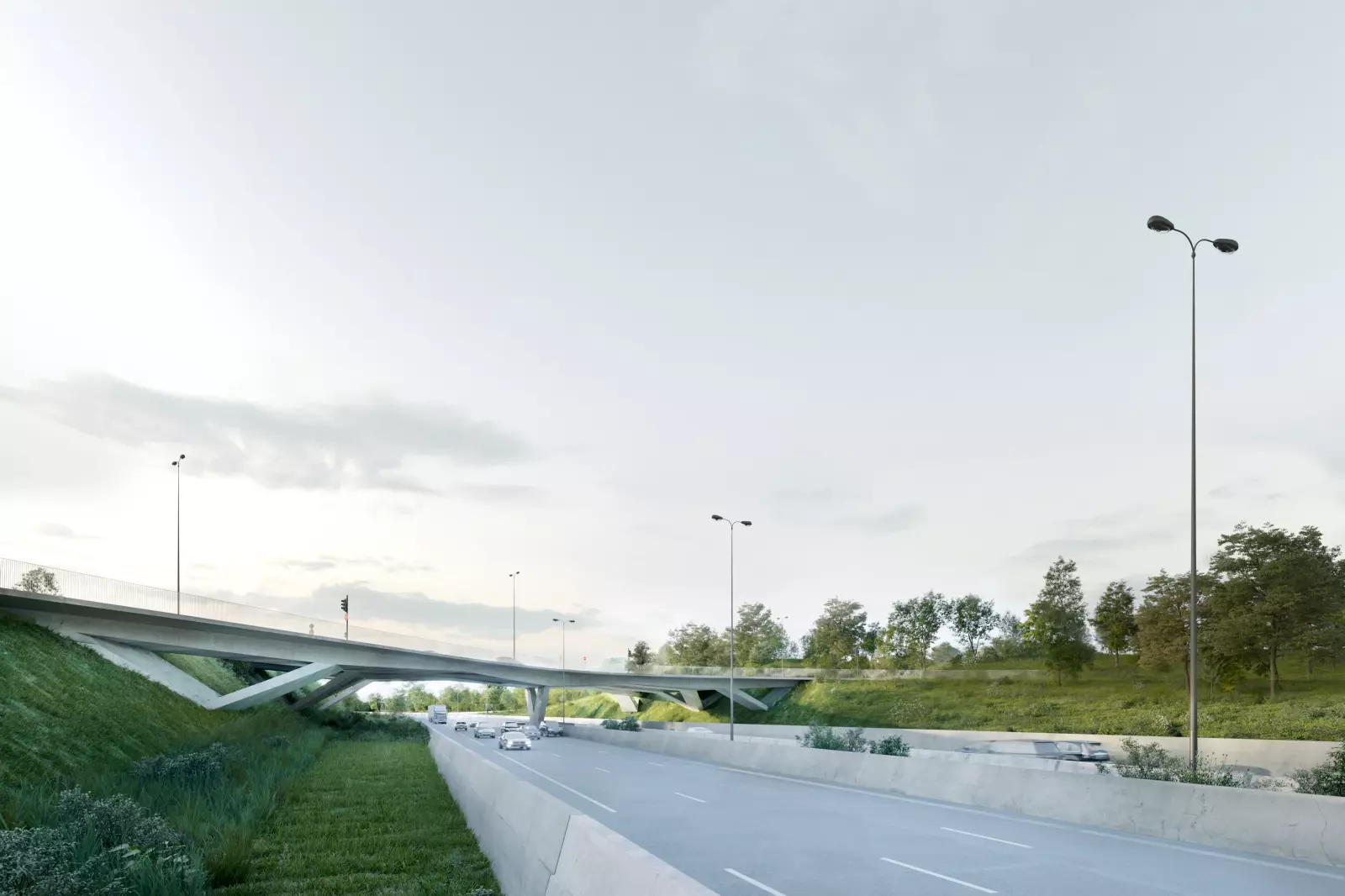
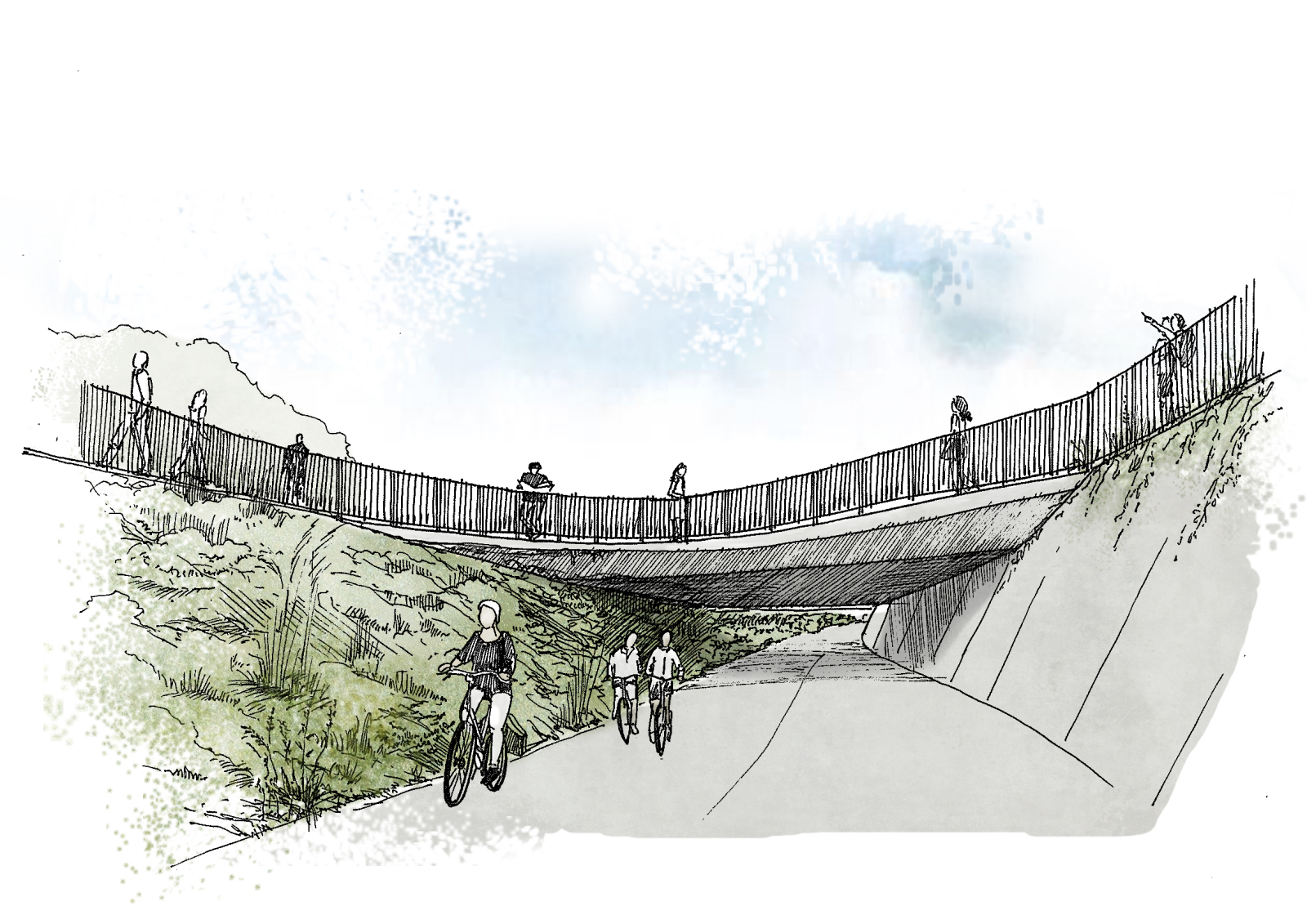
The project also strengthens slow mobility and public transport connections. New bicycle and pedestrian links, including a connection under the A201, improve accessibility between the surrounding districts and help overcome the current infrastructural barriers. Together with future mobility systems such as the airport tram and ring tram bus, these interventions support a more connected and urban future for Zaventem, Diegem and Diegem-Lo.
Through a step-by-step design process and the development of multiple scenarios, the project explores the balance between ecological landscape development, public accessibility and urban integration. The result is a vision in which infrastructure, landscape and public space reinforce each other, turning a fragmented traffic junction into a new metropolitan landscape: resilient, connected and publicly accessible.