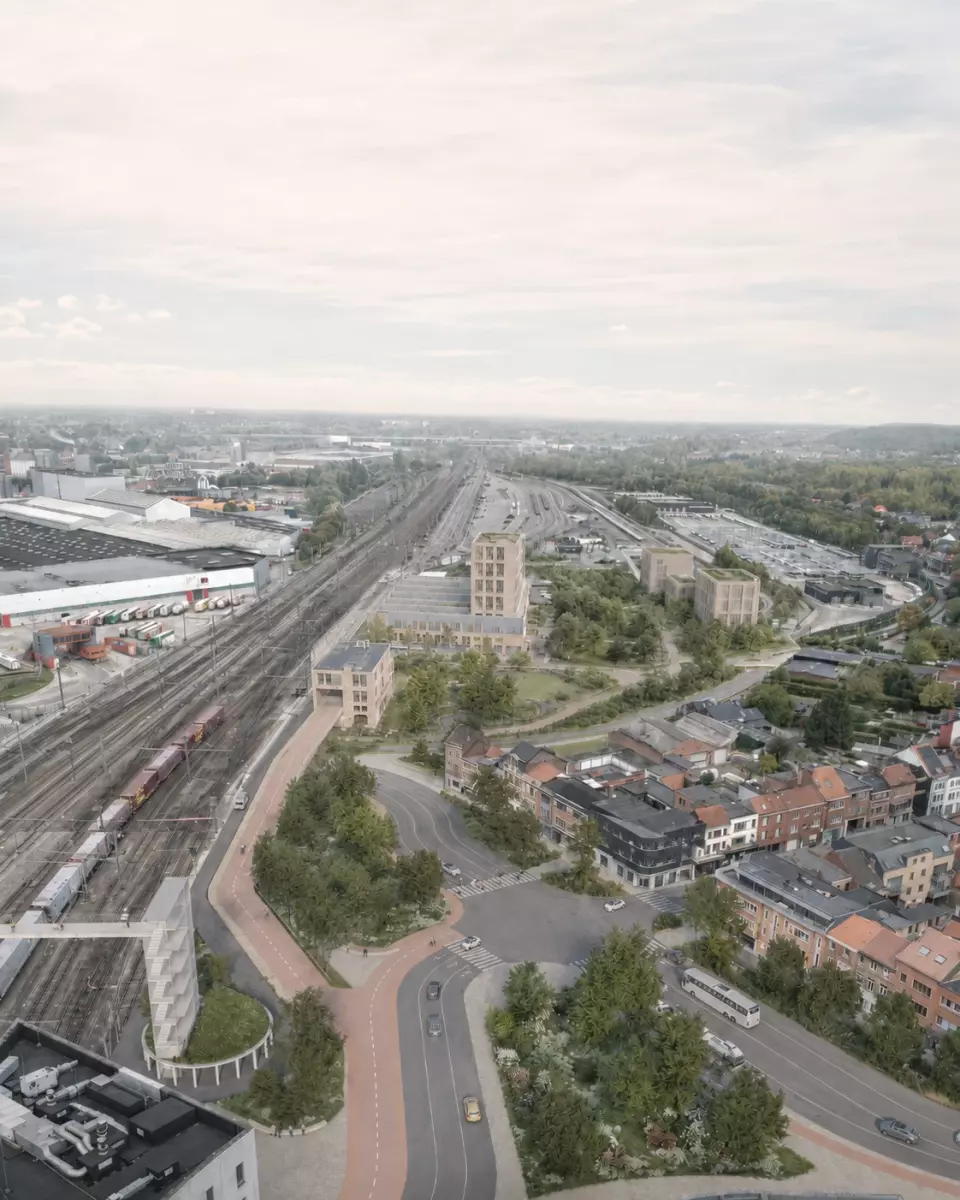
Knoop van Kessel-Lo - Field
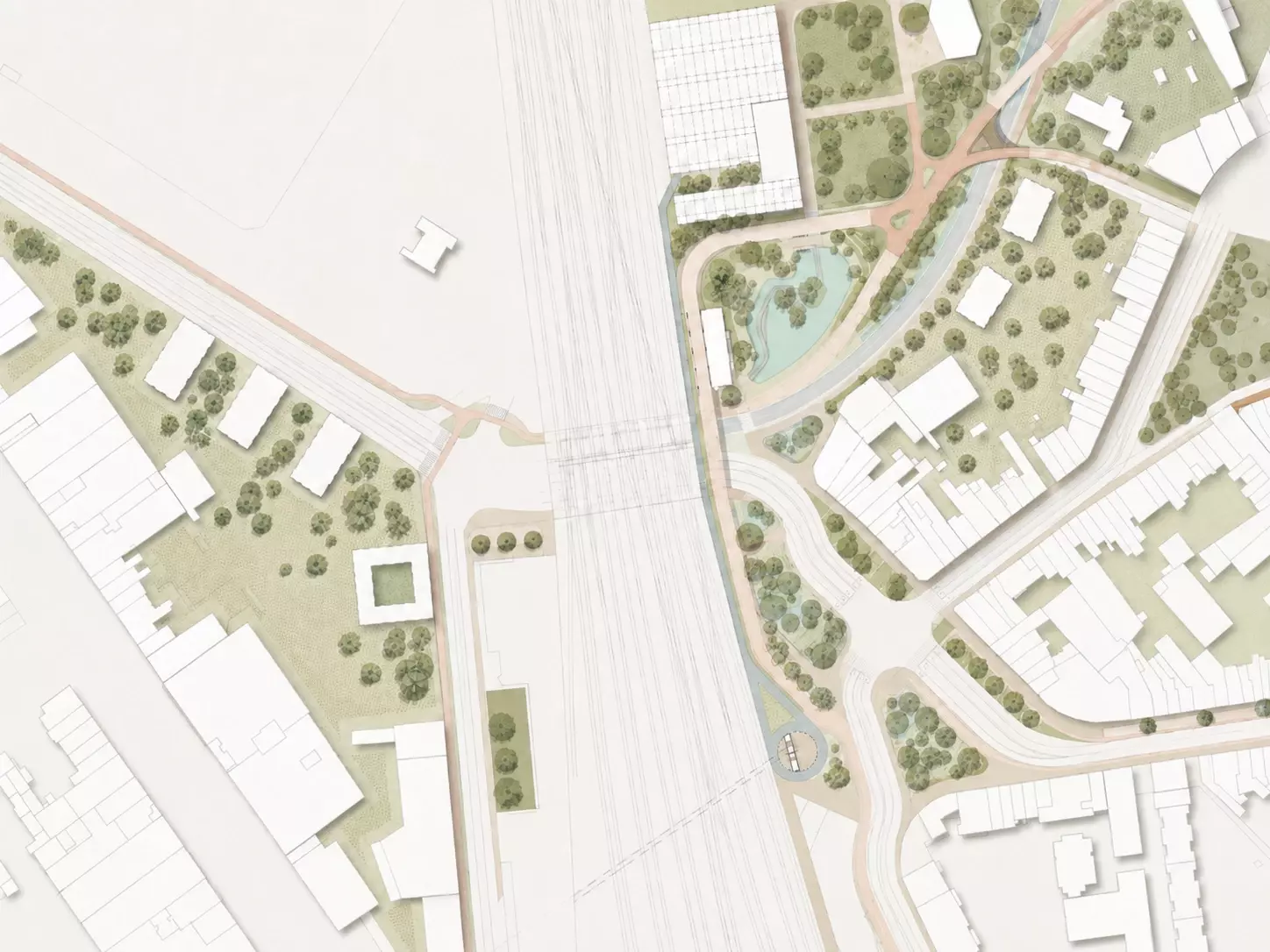
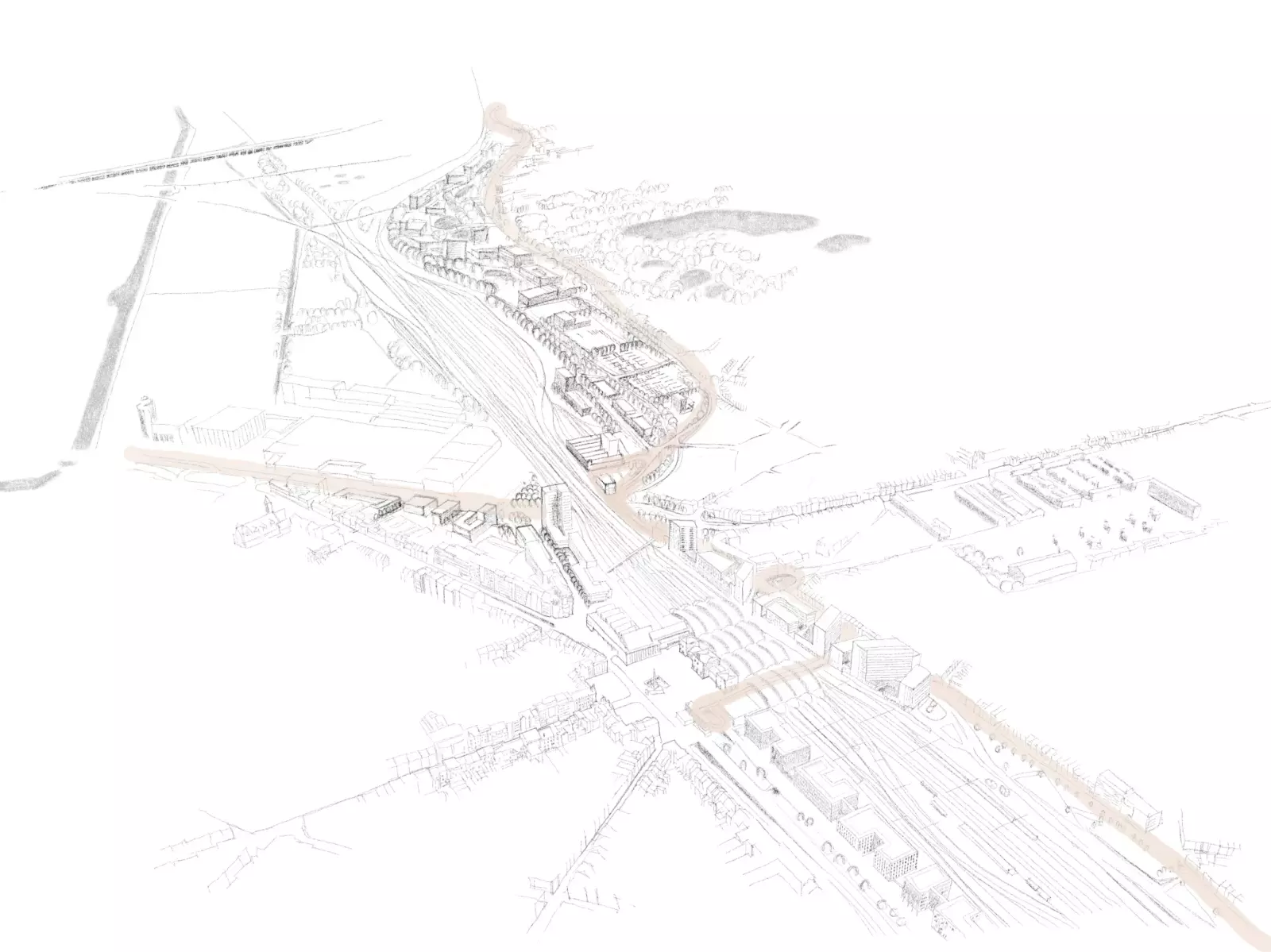
Knoop van Kessel-Lo reimagines one of Leuven’s most complex infrastructural crossings as a new urban gateway between the station, Kessel-Lo, Leuven-Noord and the wider landscape of the Dijle valley. For decades, railway infrastructure, traffic flows and fragmented public spaces have shaped this area as a bottleneck. The project starts from the ambition to transform this condition into a more resilient, legible and generous urban environment, where mobility, public space and landscape reinforce each other.
Rather than approaching the site as a purely technical mobility problem, the proposal introduces the idea of fertile infrastructure: infrastructure that becomes an active part of the city and landscape. The design works across three connected themes: multimodal mobility, public space on a human scale and a resilient landscape system. Together, these layers aim to create a more balanced urban node, where movement, ecology and everyday public life can coexist.
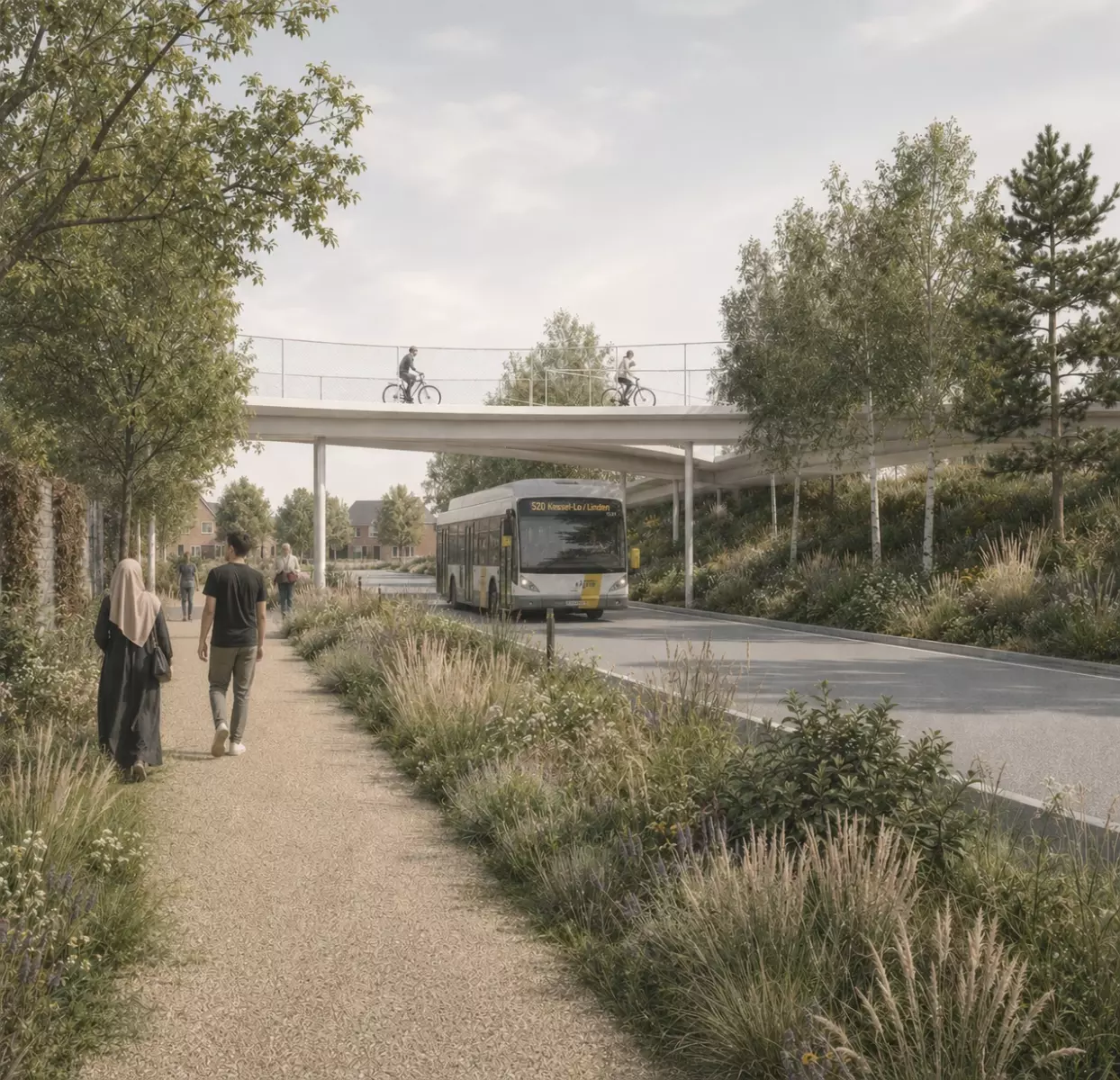
Mobility is reorganised through a careful choreography of flows. Cyclists are given a clear and comfortable position, with safer connections between the main cycle highways and direct links to the station’s bicycle facilities. Pedestrian crossings and slow connections are improved, while public transport is prioritised through faster and more reliable routes. A shuttle connection links the station with future developments around Leuven-Noord and the Spoorpark, supporting a modal shift without increasing pressure from car traffic.
The project also creates a new public address for the neighbourhood. The area around the Blauwputbrug and Diestsesteenweg is transformed into a contemporary city gate: not only a place of passage, but also a parvis for the station, the neighbourhood and the future science park. The Stationspark and Spoorpark are conceived as connected green spaces, softening the hard infrastructure and creating places for arrival, orientation, rest and encounter.
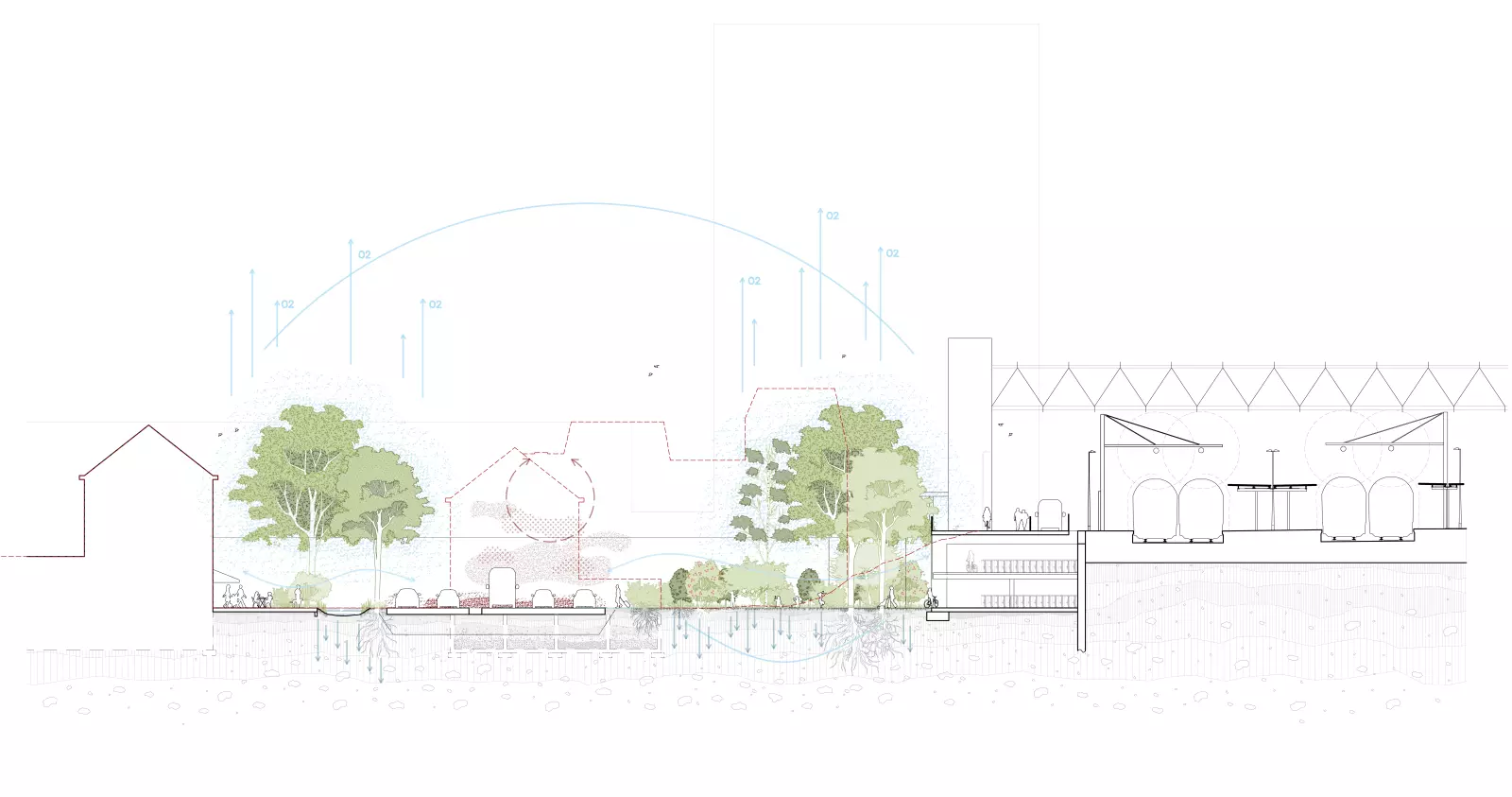
A key part of the proposal is the restoration of the underlying landscape. By removing part of the artificial railway plateau and working with the original valley conditions, the project reintroduces wetland qualities, soft slopes and ecological gradients from higher, drier areas to lower, wetter zones. Water is given space to infiltrate, buffer and support new habitats, while planting strategies reinforce biodiversity, cooling and climate resilience.
Infrastructure is carefully embedded within this landscape. Bicycle bridges, shuttle routes, pedestrian paths and a hidden bicycle parking facility are integrated with the topography rather than imposed on it. The cycling route becomes more than a functional connection: it offers a dynamic experience through a living landscape of slopes, wetlands, trees, planted edges and ecological corridors. In this way, the Knoop van Kessel-Lo becomes a new gateway to Leuven — dense, infrastructural and metropolitan, but also green, adaptive and deeply rooted in its landscape.